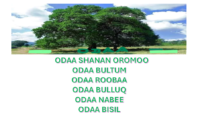
Video & Content Overview
- Title: ODAA SHANAN OROMOO FI BAKKA ITTI ARGAMAAN AKKASUMAA FAYYIDAA ODAA (The Five Sacred Odaa Trees of the Oromo, Their Locations, and Significance)
- Channel / Creator: Hawii officials (#HawiiBeekaa)
- Date Published: November 30, 2021
- Core Subject: The cultural, socio-political, and institutional significance of the Odaa (Sycamore fig) tree in Oromo civilization; the five foundational assembly centers (Odaa Shanan); and why the Odaa serves as the primary national symbol of the Gadaa system.
Executive Summary (Guduunfaa)
In Oromo indigenous democracy and governance, the Odaa tree is not merely a botanical entity; it is the physical and spiritual center of the Gadaa System, peace-making (Nagaa Oromoo), legislation (Seera Tumuu), and general assemblies (Chaffee/Caffee). Historically, the Oromo nation established major legislative centers beneath monumental Odaa trees across various regions. The five most prominent historical centers—collectively known as Odaa Shanan—are Odaa Nabee (East Shewa), Odaa Roobaa (Bale/Arsi), Odaa Bultum (West Hararghe), Odaa Bisil (West Shewa), and Odaa Bulluq (Horro Guduru Wollega). The presentation details the geographical locations of each Odaa center, explains the ecological and spiritual attributes of the tree, and details why it remains the enduring national emblem of unity and democratic deliberation for the Oromo people.
Structured English Presentation
Chapter 1: Introduction – The Cultural and Political Value of the Odaa Tree
1.1 Why the Odaa Tree Was Chosen
- Natural Parliament (Caffee Gadaa): In traditional Oromo society, the Odaa tree served as an open-air hall of governance, assembly, and customary court where laws were enacted, disputes adjudicated, and prayers (Waaqeffannaa/Du’aa’ii) offered.
- Distinct Physical and Ecological Characteristics:
- Evergreen Canopy & Shade: The Odaa provides extensive, dense, and cool shade throughout all seasons, sheltering hundreds of elders (Hayyoota), assembly members, and attendees without withering during dry seasons.
- Longevity and Resilience: It lives for centuries and maintains deep root systems that retain soil moisture, symbolizing generational endurance, resilience, and rootedness.
- Safety and Cleanliness: Traditional knowledge notes that harmful insects, poisonous reptiles, and aggressive pests rarely inhabit the branches or base of the Odaa, making it an exceptionally clean and safe environment for public deliberation.
1.2 The Sacredness of the Odaa (Safuu fi Ulfina)
- Sanctuary of Peace: Under the Odaa, carrying drawn weapons, engaging in violent behavior, or uttering profanity was strictly forbidden by customary law.
- The Living Archive: Decisions made and laws codified beneath the Odaa gained divine sanction (Dhugaa fi Qajeelummaa) and were transmitted to succeeding Gadaa generations.
Chapter 2: The Five Historical Odaa Centers of the Oromo (Odaa Shanan)
┌─────────────────────────────────┐
                        │      ODAA SHANAN OROMOO         │
                        └────────────────┬────────────────┘
                                         │
     ┌──────────────────┬────────────────┼────────────────┬──────────────────┐
     ▼                  ▼                ▼                ▼                  ▼
┌──────────────┐ ┌──────────────┐ ┌──────────────┐ ┌──────────────┐ ┌──────────────┐
│  Odaa Nabee  │ │  Odaa Roobaa │ │ Odaa Bultum  │ │  Odaa Bisil  │ │ Odaa Bulluq  │
│(Dukam/Shewa) │ │ (Bale/Arsi)  │ │ (W.Hararghe) │ │ (West Shewa) │ │(Horro Guduru)│
└──────────────┘ └──────────────┘ └──────────────┘ └──────────────┘ └──────────────┘
2.1 Odaa Nabee
- Location: Located in Dukam (East Shewa Zone, Central Oromia), near Mount Yerer.
- Historical Significance: One of the most central and ancient assembly points for the Tuulama confederacy. It served as a vital spiritual, legislative, and Gadaa power transfer (Baallii Dabarsuu) venue for centuries.
2.2 Odaa Roobaa
- Location: Situated in the Bale Zone (near Robe town, Southeastern Oromia).
- Historical Significance: The historical assembly center for the Sikko-Mando (Arsi-Bale) branches of the Oromo. It played a crucial role in harmonizing customary laws and resolving inter-clan affairs across the southeastern territories.
2.3 Odaa Bultum
- Location: Located in West Hararghe Zone (near Chiro/Badanno, Eastern Oromia).
- Historical Significance: The legendary assembly center for the Barentu (specifically the Ittu and Humbanna) moieties. It was a nexus of regional defense organization, diplomatic pacts, and cultural unity in eastern Oromia.
2.4 Odaa Bisil
- Location: Located in West Shewa Zone (near Ilu Galan / Gedo / Ambo, Central-Western Oromia).
- Historical Significance: The foundational legislative center associated with the expansion and consolidation of the Maccaa confederacy before branching further into western Oromia.
2.5 Odaa Bulluq
- Location: Situated in the Horro Guduru Wollega Zone (Western Oromia).
- Historical Significance: Served as the central Gadaa general assembly and supreme judicial center for the western clans and neighboring communities, preserving peace and legal jurisprudence.
Chapter 3: Societal and Institutional Functions of the Odaa
3.1 Legislative Center (Bakka Seera Tumuu)
- Every eight years, during the transition of Gadaa leadership, representatives gathered under the Odaa to review existing laws, repeal obsolete statutes, and enact updated customary laws (Seera Haaromsuu).
3.2 Conflict Resolution and Customary Justice (Jaarsummaa fi Gumaa)
- Complex territorial disputes, clan conflicts, and blood-money arbitrations (Gumaa) were deliberated and finalized under the shade of the Odaa, ensuring mutual reconciliation and social cohesion.
3.3 Prayers and Spiritual Supplications (Irreecha fi Waaqeffanna)
- Elders gathered at the base of the Odaa to conduct blessings (Eebba) for fertility, rain, health, peace, and abundance for the community and livestock.
Chapter 4: Contemporary Significance & The Odaa as a National Emblem
4.1 Modern Political and Civic Symbolism
- The silhouette of the Odaa is the universal national emblem of the Oromo nation, featured prominently on regional flags, civic seals, educational institutions, and cultural organizations.
4.2 Preserving Indigenous Democratic Heritage
- Modern communities are urged to safeguard historic Odaa sites from environmental degradation, deforestation, and urban encroachment, keeping the memory and democratic ethos of the ancestors alive for upcoming generations.
Afaan Oromoo
Odeeffannoo Viidiyichaa fi Qophii
- Mata-duree Sagantichaa: ODAA SHANAN OROMOO FI BAKKA ITTI ARGAMAAN AKKASUMAA FAYYIDAA ODAA
- Madda / Chaanaalii: Hawii officials (#HawiiBeekaa)
- Guyyaa Maxxansaa: Sadaasa 30, 2021
- Dhimma Ijoo: Ibsa bal’aa waa’ee Odaa Shanan Oromoo, iddoo teessuma isaanii, faayidaa fi safuu Odaa sirna Gadaa keessatti, akkasumas sababa Odaan mallattoo tokkummaa fi biyyoolessaa Oromoo ta’eef.
Cuunfaa Waliigalaa (Executive Summary)
Aadaa fi seenaa uummata Oromoo keessatti Odaan muka salphaa ykn uumamaa qofa osoo hin taane, handhuura Sirna Gadaa, nagaa Oromoo, bakka seera itti tuman, murtii itti kennanii fi Caffee itti taa’aniidha. Seenaa keessatti Oromoon kutaalee garaagaraa keessatti mukeen Odaa gurguddoo jalatti walitti qabamuun dhimma siyaasaa, dinagdee, fi hawaasummaa murteeffachaa ture. Odaawwan seena-qabeeyyii Oromiyaa keessatti beekamoo ta’an shanan kanneen Odaa Shanan jedhamu: Odaa Nabee (Shawaa Bahaa), Odaa Roobaa (Baalee/Arsii), Odaa Bultum (Harargee Lixaa), Odaa Bisil (Shawaa Dhihaa), fi Odaa Bulluq (Horroo Guduruu Wallaggaa) ti. Qophiin kun iddoo teessuma Odaawwan kanaa, faayidaa isaanii, fi sababa Odaan mallattoo olaanaa sabichaa ta’eef gadi-fageenyaan ibsa.
Boqonnaa 1: Seensa – Faayidaa fi Safuu Muka Odaa
1.1 Maaliif Odaan Filatame?
- Paarlaamaa Uumamaa (Caffee Gadaa): Hawaasa Oromoo durii keessatti Odaan akka holqa/galma walga’ii uumamaatti tajaajila; jaarsoliin, hayyoonni, fi abbootiin Gadaa jalatti walitti qabamuun seera tumu, nagaa buusu, akkasumas Waaqa kadhatu.
- Amaloota Uumamaa kan Muka Odaa:
- Gaaddisa Bal’aa fi Qabbanaawaa: Odaan waggaa guutuu hin arca’u; baalli isaa yeroo gannaas ta’e boonaa lalisaa fi gaaddisa bareedaa kennuun namoota dhibbootaan lakkaa’aman qabbana isaatiin golga.
- Umrii Dheeraa fi Hiddasaa Gadi-fageessuu: Muki Odaa waggoota dhibbaan lakkaa’amaniif kan jiraatu yoo ta’u, hiddi isaa gadi-fagaatee bishaan lafa jalaa qabachuudhaan qusata; kunis jabaachuu fi hundee qabaachuu sabaa bakka bu’a.
- Qulqullina fi Nageenyummaa: Beeyladoonni ykn ilbiisonni summii qaban (akka bofaa fi goondaa) mukarra ykn jala akka hin jiraanne amanama; kunis namoonni nagaan akka jalatti mari’ataniif bakka mijataa isa taasisa.
1.2 Safuu fi Ulfina Odaa
- Bakka Nagaa fi Dhiifamaa: Muka Odaa jalatti meeshaa waraanaa baachuun, loluun, arrabsoon, fi dhiiga dhangalaasuun gonkumaa dhowwaa fi safuudha.
- Bakka Dhugaan Itti Dubbatamu: Murtii fi seerri Odaa jalatti darbu eebbaa fi dhugaa Waaqaa irratti kan hundaa’e waan ta’eef kabajaa olaanaa qaba.
Boqonnaa 2: Odaa Shanan Oromoo fi Bakka Itti Argaman
2.1 Odaa Nabee
- Bakka Itti Argamu: Godina Shawaa Bahaa, Magaalaa Dukam cinatti, Tulluu Yerar cinaatti argama.
- Seenaa Isaa: Caffee fi bakka heeraa isa guddaa kan gosa Tuulamaa ture. Waggoota hedduudhaaf bakka baallii itti walharkaa fuudhan, seera itti haaromsan, fi dhimma biyyaa itti murteessan ta’ee tajaajileera.
2.2 Odaa Roobaa
- Bakka Itti Argamu: Godina Baalee, naannoo Magaalaa Roobee keessatti argama.
- Seenaa Isaa: Bakka yaa’ii fi Caffee gosa Siikoo-Mandoo (Arsii fi Baalee) ture. Waldhabdee kutaalee bahaa fi kibba-bahaa hiikuu fi aadaa gabbisuu keessatti gahee seena-qabeessa qaba.
2.3 Odaa Bultum
- Bakka Itti Argamu: Godina Harargee Lixaa, naannoo Ciroo/Baddannoo keessatti argama.
- Seenaa Isaa: Bakka seeraa fi Caffee gosa Baarentuu (keessattuu Ittuu fi Humbannaa) ture. Tokkummaa uummata Oromoo bahaa cimsuu fi heera waloo qopheessuu keessatti hundee guddaadha.
2.4 Odaa Bisil
- Bakka Itti Argamu: Godina Shawaa Dhihaa, naannoo Iluu Galaan / Geedo / Amboo gidduutti argama.
- Seenaa Isaa: Bakka Caffee fi seera tumuu isa jalqabaa kan gosa Maccaa ture. Oromoon Maccaa gara dhihaatti osoo hin babal’atin dura bakka heeraa fi sirna Gadaa itti qindeeffataniidha.
2.5 Odaa Bulluq
- Bakka Itti Argamu: Godina Horroo Guduruu Wallaggaa keessatti argama.
- Seenaa Isaa: Bakka murtii seeraa fi Caffee Gadaa kan kutaalee dhiha Oromiyaa ture; haqa mirkaneessuu fi nagaa buusuuf gumaacha guddaa qaba.
Boqonnaa 3: Faayidaalee Hawaasummaa fi Siyaasaa kan Odaa
3.1 Seera Tumuu fi Haaromsuu
- Waggaa saddeet saddeetiin yeroo baalliin Gadaa jijjiiramu, hayyoonni Odaa jalatti walga’uun seera moofaa sirreessu, seera haaraa yeroon barbaadu tuman.
3.2 Jaarsummaa fi Gumaa
- Walitti-bu’iinsa gurguddaa, falmii lafaa, fi dhimma dhiigaa (gumaa) Odaa jalatti jaarsoliin taa’anii araara nagaatiin xumuru.
3.3 Eebba fi Kadhannaa (Waaqeffannaa)
- Roobni akka roobuuf, biyyi nagaa akka ta’uuf, dhalli fi loon akka gabbatan abbootiin Odaa jalatti eebba fi kadhannaa gaggeessu.
Boqonnaa 4: Faayidaa Ammayyaa fi Mallattoo Biyyoolessummaa
4.1 Mallattoo Biyyoolessaa Ta’uu Isaa
- Fakkii fi bifti Odaa har’a alaabaa naannoo Oromiyaa, asxaa barnootaa, waraqaa ragaa dhaabbilee, fi waldaalee aadaa hunda irratti mallattoo qulqullummaa, dimokiraasii, fi tokkummaa ta’ee tajaajila.
4.2 Dhaloota Haaraaf Dhaamuu
- Iddoowwan seena-qabeeyyii Odaa Shanan kunniin akka hin banne, hin caccabne, fi qabeenyi uumamaa isaanii akka eegamu gochuun dhaloota boruutiif hambaa seenaa guddaa dabarsuudha.